
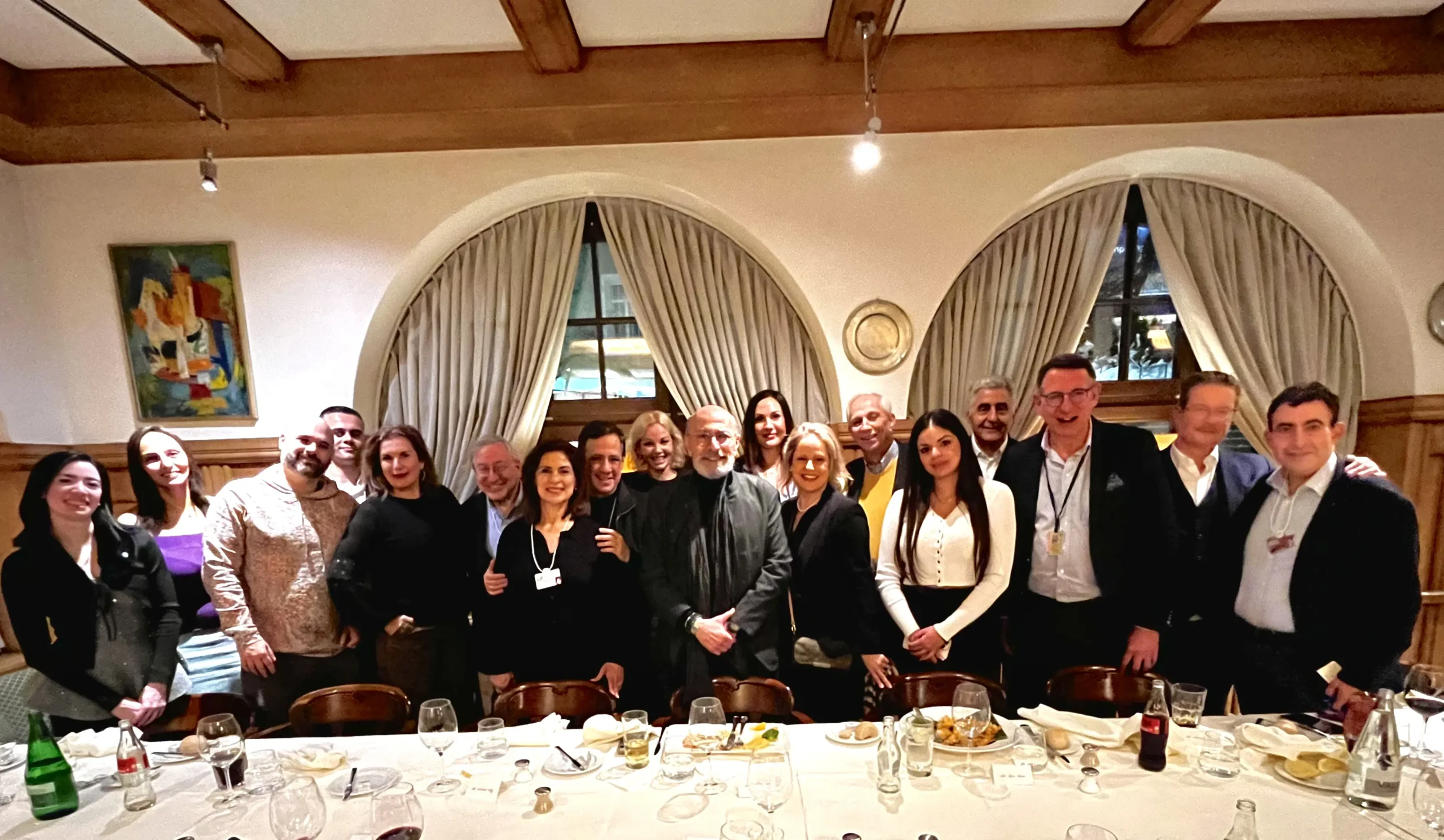
On 18 January 2026, Chairman M. Shafik Gabr, Founder of the Shafik Gabr Foundation, welcomed a distinguished group of global leaders and experts to a private dinner discussion in Davos, hosted by the Foundation. Held under Chatham House Rules, the evening brought together international experts from the fields of politics, business, security, economics, media, technology, diplomacy, international affairs, and arts; gathered to share perspectives and forecasts on the year ahead, engaging in a thoughtful, candid, and forward-looking exchange.
The dinner took place at the Central Sporthotel in Davos, Switzerland, and brought together a highly selected group, including Mr. Michael Kasbar, the Chief Executive Officer of World Kinect Corporation, Mr. Sandy Climan, Founder and CEO of Entertainment Media Ventures, Inc. (EMV), Mr. Michael Stirling, CEO and Chairman of the Investment Board at Stirling Infrastructure Partners, Ms. Irene Vanteraki, Investment Director & International Affairs Strategist, Mr. Rainer Schorr, Co-Founder, Chairman & Main Shareholder at Standard Land, Dr. Frank-Jürgen Richter, Chairman of Horasis – The Global Visions Community, and HE. Katrin Eggenberger, Former Minister of Foreign Affairs, Education and Sport of Liechtenstein.
These discussions reflected the Foundation’s ongoing commitment to bridging knowledge and addressing global challenges through open conversation and cross-sectoral exchange.
Referencing the increasing levels of conflict worldwide, M. Shafik Gabr opened the discussion by emphasizing the importance of maintaining strong interpersonal networks and sustained face-to-face engagement across national, geopolitical, and cultural divides. He underscored the Foundation’s role in cultivating a trusted community of international leaders, where mutual understanding and collaboration can translate into tangible social and political outcomes.
During the discussion, a question was posed to the group: “How many believe 2026 will be better than 2025?” Only a small minority raised their hands, reflecting a prevailing sense of global uncertainty.
Participants were then invited to reflect on a series of broader questions, summarized below without attribution, highlighting shared concerns and expectations for the year ahead.
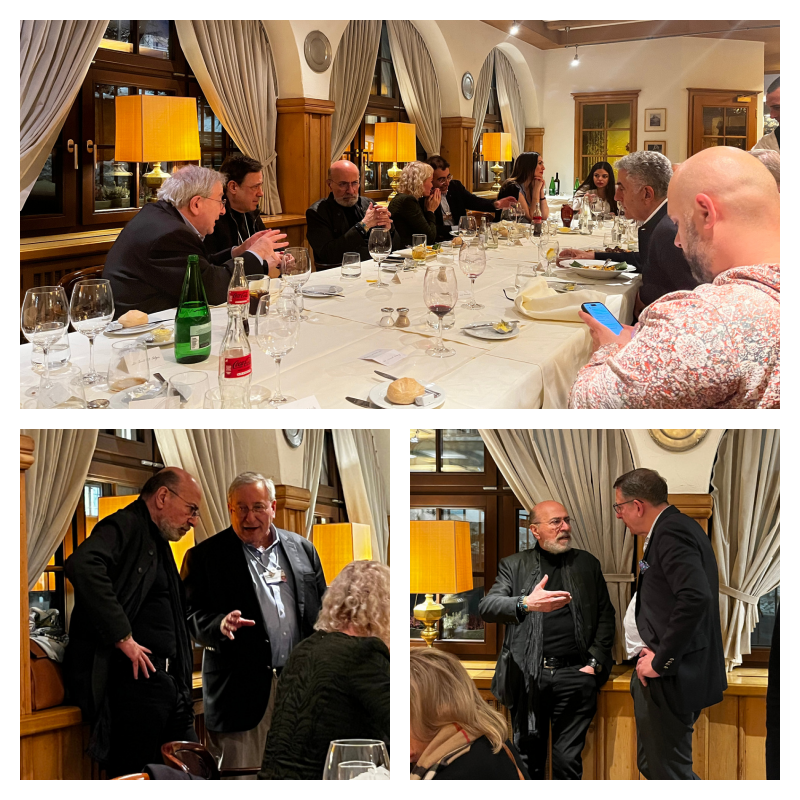
Participants expressed concern that insufficient political will continues to hinder meaningful progress in resolving global conflicts and reducing the risk of further escalation. Many felt that this lack of political resolve is likely to persist throughout 2026.
Despite differing political perspectives, there was broad consensus that courage, wisdom, determination, empathy negotiation, and sustained dialogue are essential to improving global conditions. However, in the absence of effective global leadership, many guests expressed skepticism that such progress would be realized in this year.
The majority of attendees emphasized their desire to find common ground and articulated shared aspirations, including progress toward just and sustainable solution for a Palestinian state, peace between Ukraine and Russia, constructive alternatives to economic decoupling with China, lower interest rates, and a safer, more stable world for future generations. Nonetheless, most participants felt that these outcomes are unlikely to be achieved in 2026.
The evening concluded with a discussion on technology as a key tipping point for future advancement, with particular focus on artificial intelligence and its dual impact on emerging generations and the transformation of global industries.